
A Class D license is the state credential Florida requires for anyone performing unarmed private security work, and the fastest route to holding one runs through three checkpoints: 40 hours of state-approved training, LiveScan fingerprinting, and a completed application with the Florida Department of Agriculture and Consumer Services (FDACS). Most applicants who stay organized move from enrollment to working credential in a matter of weeks.
Here’s the short version:
- Complete a 40-hour Class D course at a state-licensed (Class DS) school and get your certificate.
- Schedule LiveScan fingerprinting and keep the receipt.
- Submit the FDACS Class D application with your certificate, fingerprint confirmation, photo, and fee.
Pro Tip: Temporary work authorization is often available while FDACS finishes processing your file, so you may not have to sit idle waiting on your card.
Table of Contents
- What Are the Eligibility Requirements for a Florida Class D License?
- What Does the 40-Hour Class D Training Cover?
- How Do You Apply for a Class D Permit in Florida?
- How Long Does Processing Take and What Does It Cost?
- How Long Does a Class D License Last, and Who’s Exempt From Training?
- Who’s Behind This Guide and How Global Security Helps
- Turning Research Into a Filed Application
- What Most Guides Get Wrong About Class D Licensing
- Ready to Start Your Class D Training in Florida?
- Sources
What Are the Eligibility Requirements for a Florida Class D License?
Before spending a dollar on training, confirm you actually qualify. FDACS requires applicants to be at least 18 years old and either a U.S. citizen, a legal resident alien, or someone holding valid work authorization from DHS/USCIS. Those two boxes trip up more applicants than any part of the training itself.
Certain backgrounds disqualify you outright, and it’s worth knowing them before you enroll:
- Felony convictions or certain misdemeanor convictions tied to violence, theft, or moral character issues.
- Adjudicated mental incompetence or involuntary commitment without documented restoration of competency.
- Active substance-related legal prohibitions that conflict with state licensing standards.
Currently employed or certified law enforcement officers are typically exempt from some licensing steps, a point covered further below. You’ll also need documents proving identity, Social Security number, and Florida residency. The Florida Department of Highway Safety and Motor Vehicles publishes a solid reference list of acceptable identification if you’re unsure what qualifies.
What Does the 40-Hour Class D Training Cover?
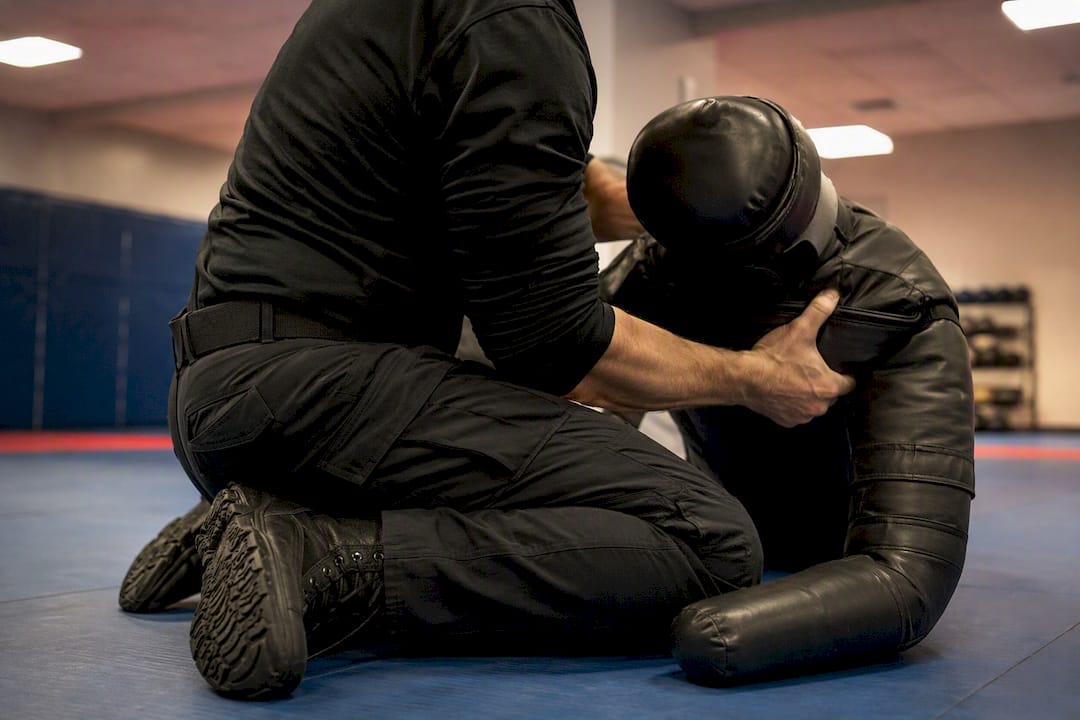
Every Class D applicant must complete a minimum of 40 hours of instruction at a state-licensed security school, commonly called a Class DS provider. This isn’t a formality. The curriculum builds the working knowledge you’ll rely on during actual shifts.
Expect coursework across these core areas:
- Patrol procedures and observation techniques.
- Legal authority and limitations of an unarmed security officer.
- Emergency response and evacuation protocols.
- Report writing and incident documentation.
- Communication and de-escalation tactics.
Schools administer a final assessment, and passing it triggers issuance of your completion certificate, the single document FDACS treats as proof you met the training mandate. Some providers, including Global Security’s Class D training program, run live-online sessions with identity verification and proctored testing, which works well if you’re balancing a job while completing the course.
Before enrolling anywhere, confirm the school actually holds Class DS licensure. A quick call to the school or a check through FDACS records saves you from wasting 40 hours on a certificate the state won’t accept.
Pro Tip: If you completed your course on or after July 19, 2023, FDACS wants you to look up and print your specific training certificate through their online lookup tool rather than relying solely on the paper copy your school handed you. Keep both versions in your file; some reviewers and employers ask to see the printed lookup copy specifically.
How Do You Apply for a Class D Permit in Florida?
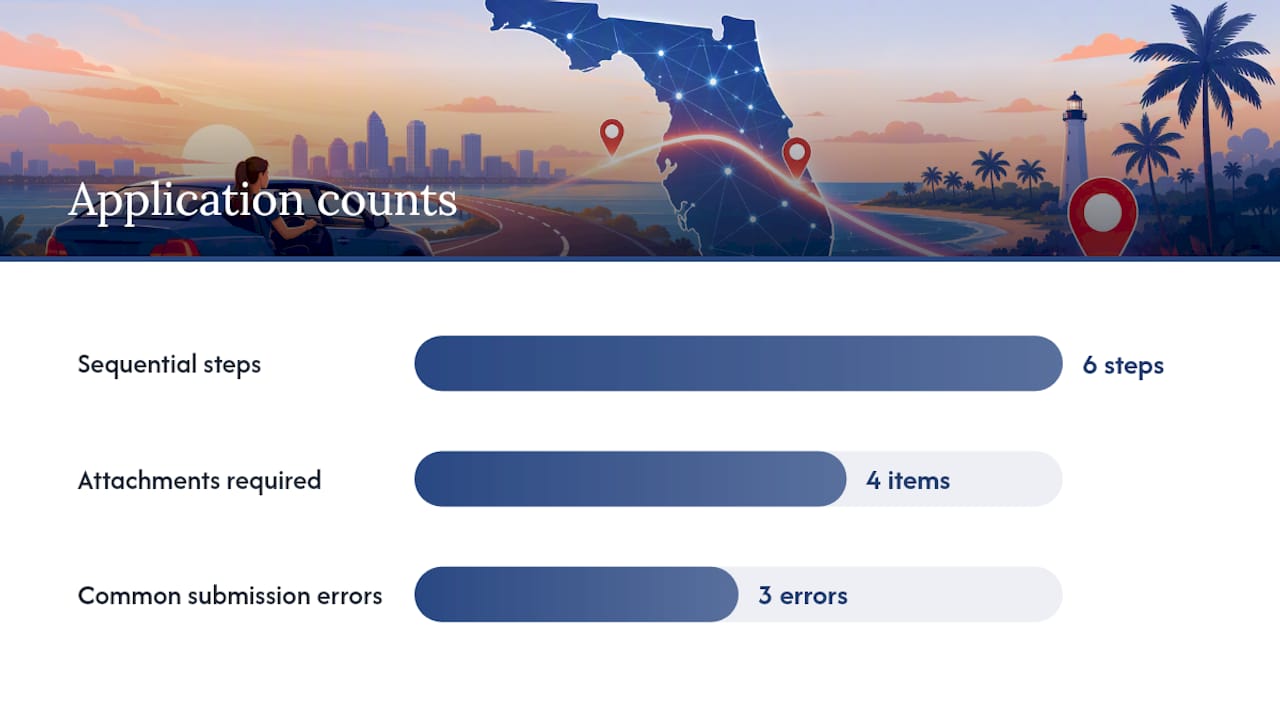
Once training is behind you, the application itself is mostly a matter of sequencing. Follow these steps in order and you’ll avoid the delays that trip up first-time applicants:
- Finish your 40-hour course and confirm your school issued a valid completion certificate.
- Schedule LiveScan fingerprinting through an approved vendor. FDACS requires a fingerprint-based background check as part of the standard application flow, and you’ll need the receipt.
- Complete the official application form, available directly from FDACS’s application portal.
- Gather your attachments: training certificate, fingerprint receipt, a passport-style photo, and payment for the application fee.
- Submit the packet by mail to the address listed on the FDACS form, or through whatever electronic option FDACS currently offers for your license type.
The most common submission errors include forgetting to attach the training certificate, submitting a fingerprint receipt that doesn’t match the LiveScan vendor’s format FDACS expects, or sending incomplete identification that doesn’t satisfy the residency requirement. Double check every attachment against the checklist on the application form itself before you seal the envelope.
Once submitted, you can typically follow up on status through FDACS’s licensing contact channels if weeks pass without a response. Keep a copy of everything you mailed. If a reviewer flags a missing document, having your own record speeds up the fix considerably.
How Long Does Processing Take and What Does It Cost?
Processing timelines vary, but industry-compiled estimates suggest FDACS commonly completes review within days to a few weeks once a complete application lands on a reviewer’s desk. Many applicants receive temporary authorization to begin working while the permanent license finishes processing, which matters if a job offer is waiting on your credential.
Budget for these costs:
- Training course fees, typically $100 to $300 depending on the provider and delivery format.
- The FDACS application fee, paid at submission.
- A separate fingerprinting/LiveScan fee charged by the vendor.
Incomplete paperwork and background check flags are the two biggest delay culprits. If your fingerprint results take unusually long to clear or your certificate submission is questioned, expect processing to stretch beyond the typical window. Check status through FDACS licensing support rather than guessing.
How Long Does a Class D License Last, and Who’s Exempt From Training?
A Class D license operates on a renewal cycle, and staying current means submitting your renewal application and fee before expiration rather than after your credential lapses. Renewal is generally simpler than the initial application since you’ve already cleared the background check and training requirement once.
Not everyone needs the full 40 hours. Certain groups qualify for exemptions:
- Currently certified law enforcement officers.
- Correctional officers holding FDLE CJSTC certification.
- Applicants who can document equivalent prior certification.
Exemption still requires proof, typically a certification letter or official credential copy submitted with your application. If FDACS denies your application, you’re not out of options. The denial notice explains the grounds, and you can pursue remediation or an administrative appeal through FDACS’s official channels rather than starting over from scratch.
Who’s Behind This Guide and How Global Security Helps
This guide is written by Alston, drawing on close familiarity with Florida’s private security licensing framework through Global Security’s training division.
Global Security runs Class D, Class G armed licensing, concealed carry, and pistol training programs, each mapped directly to the state’s licensing steps rather than generic curriculum. That alignment matters when you’re trying to avoid the paperwork mistakes covered above.
- Certificate issuance handled directly, reducing the lookup scramble after July 2023 rule changes.
- LiveScan scheduling coordination built into the enrollment process.
- Range access for applicants planning to pursue Class G or concealed carry credentials next.
Pro Tip: If you already know you’ll want armed certification eventually, ask your training provider whether Class D and Class G coursework can be sequenced back to back. It often saves a second round of paperwork.
Turning Research Into a Filed Application
Completing Class D training and passing a background check is the reliable, state-defined route to unarmed security work in Florida, and skipping steps only slows the outcome down.
| Point | Details |
|---|---|
| Confirm eligibility first | Verify age, citizenship or work authorization, and clean background before paying for training. |
| Choose a licensed Class DS school | Confirm state licensure before enrolling to guarantee your certificate is accepted. |
| Retrieve the post-2023 certificate | Print the FDACS lookup certificate if your course finished after July 19, 2023. |
| Assemble a complete packet | Include certificate, fingerprint receipt, photo, and fee to avoid processing delays. |
| Global Security supports the pipeline | Its Class D training program pairs coursework with certificate and LiveScan coordination. |
What Most Guides Get Wrong About Class D Licensing
The conventional advice treats Class D licensing like a bureaucratic checkbox: take a course, mail a form, wait. That framing undersells how much the sequence matters. Applicants who fail don’t usually fail eligibility. They fail logistics: a missing post-2023 certificate lookup, a fingerprint receipt in the wrong format, an application mailed before the background check clears.
What gets overrated is worrying about the 40-hour curriculum itself. The material is straightforward, and passing the final assessment isn’t the bottleneck for most people. What gets underrated is document management. The applicants who move fastest are the ones who treat their certificate, fingerprint receipt, and ID documents like a single file from day one, not scattered paperwork assembled the night before mailing.
If you take one thing from this guide, prioritize choosing a properly licensed Class DS school before anything else. A great curriculum from an unlicensed provider is worthless to FDACS, no matter how good the instruction was.
— Alston
Ready to Start Your Class D Training in Florida?
Global Security gets you licensed faster than piecing together a school, a fingerprint vendor, and a mailed application on your own; the Class D training program bundles the 40-hour curriculum with certificate issuance and LiveScan scheduling under one roof, so nothing falls through the cracks between steps. For readers who found the fingerprinting and paperwork sections above the most confusing part of this process, that coordination is exactly the friction Global Security removes.
Once you’re licensed, Global Security’s guard services division also places qualified officers with businesses across Florida actively hiring Class D holders. If firearms certification is part of your longer-term plan, ask about sequencing into Class G or concealed carry training right after your Class D course finishes. Reach out through Global Security’s services page to check current course dates and enrollment availability.
Sources
- Class “D” Security Officer License Requirements – Florida Department of Agriculture & Consumer Services
- Application for Class D Security Officer License – FDACS
- Frequently Asked Questions – Florida Department of Highway Safety and Motor Vehicles
- Florida Security Guard License: Class D & G | Novagems